Solid Waste Management
Solid Waste Management refers to the systematic collection, segregation, transportation, processing, recycling, and disposal of waste materials generated by residential, commercial, institutional, and industrial sources. Proper SWM is critical to public health, environmental protection, and urban sustainability.
Classification of Solid Waste Streams
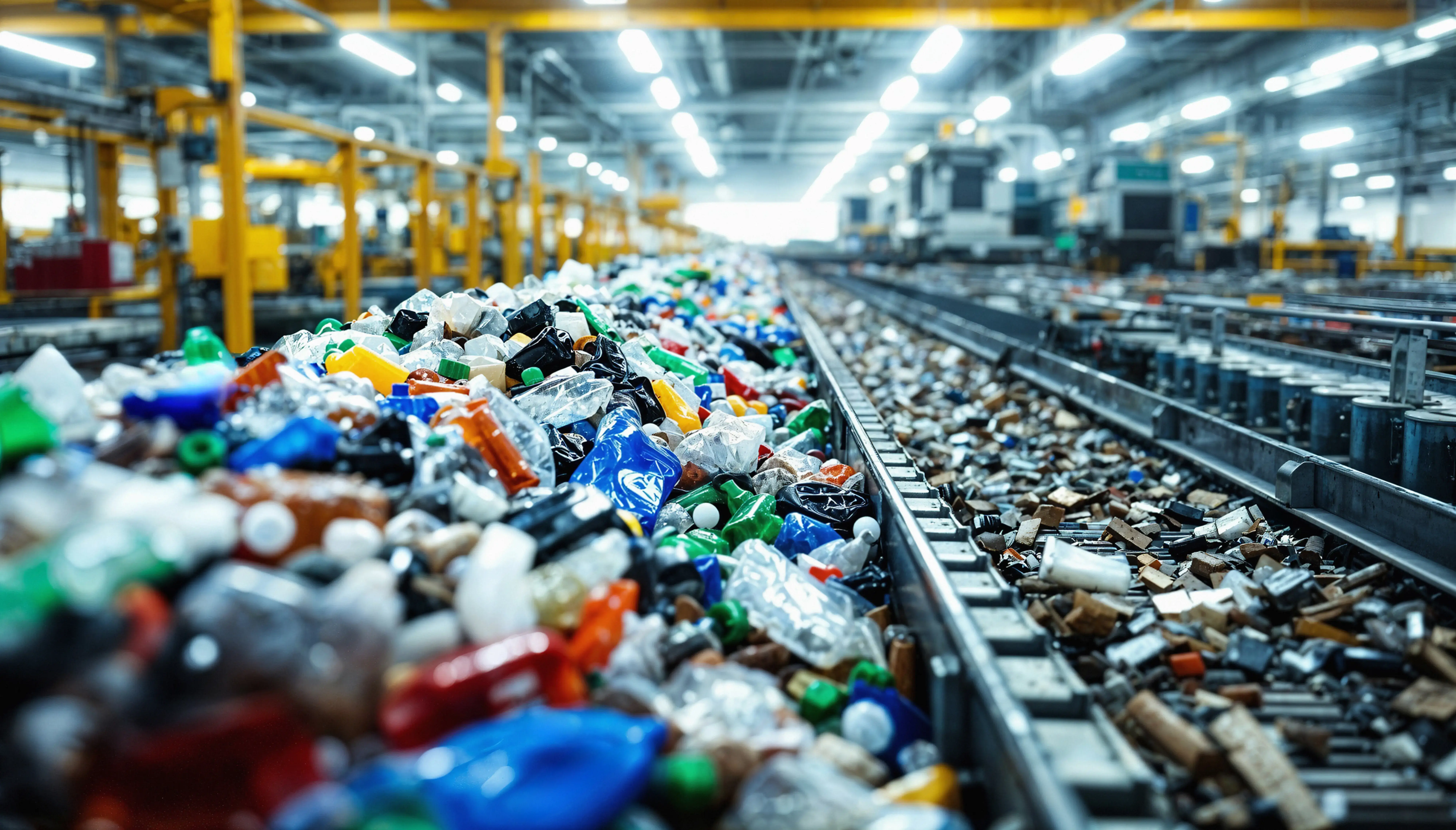
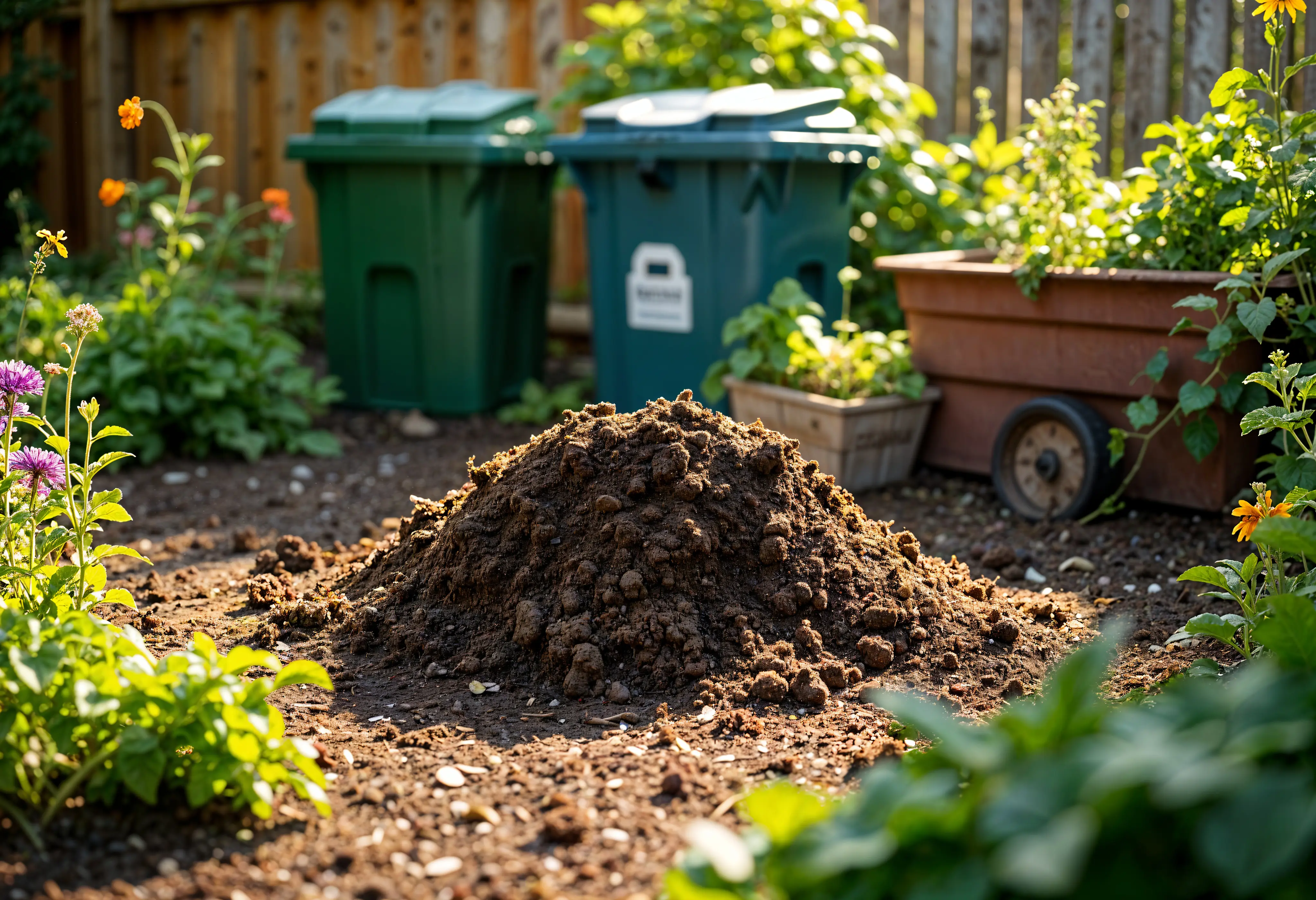
Agricultural Waste
- 🌾 Generated from farming and agro-based activities including crop cultivation, livestock rearing, and food processing
- 🍂 Includes crop residues (straw, husks, stalks), animal manure, poultry litter, spoiled produce, and agro-processing by-products
- ♻️ Proper management involves composting, mulching, anaerobic digestion, and bioenergy production
- 💡 Converts waste into useful resources like organic manure and biogas
- 🌱 Sustainable practices improve soil health, reduce open burning, lower greenhouse gas emissions, and support circular economy principles
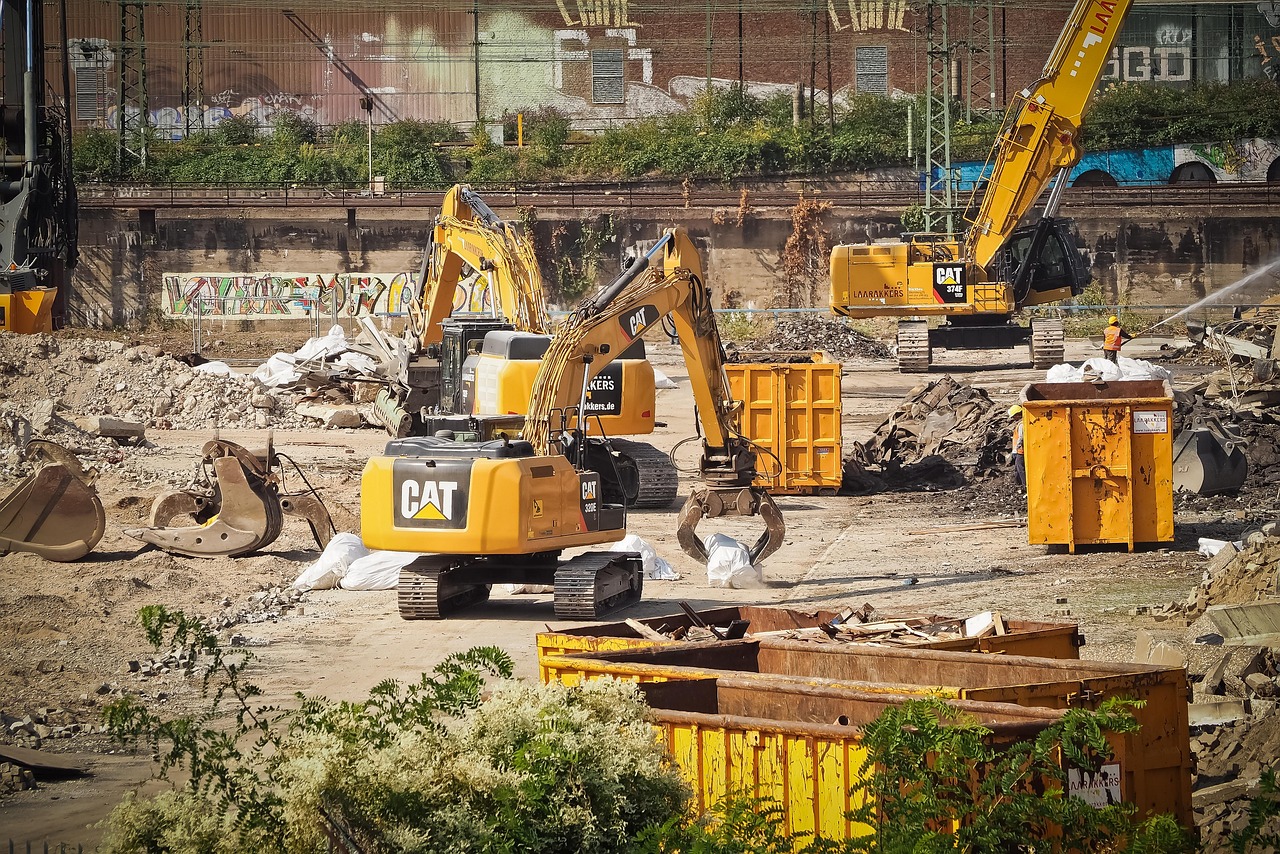
Construction & Demolition Waste
- 🏗️ Generated from building, renovation, repair, and demolition activities
- 🧱 Includes materials like concrete, bricks, wood, metals, glass, asphalt, soil, and debris
- ♻️ Managed through segregation, reuse, and recycling of aggregates, metals, and wood
- 🚧 Recycled C&D materials can be used in road construction, backfilling, and new building projects
- ✅ Proper handling ensures compliance with regulations and promotes a circular economy
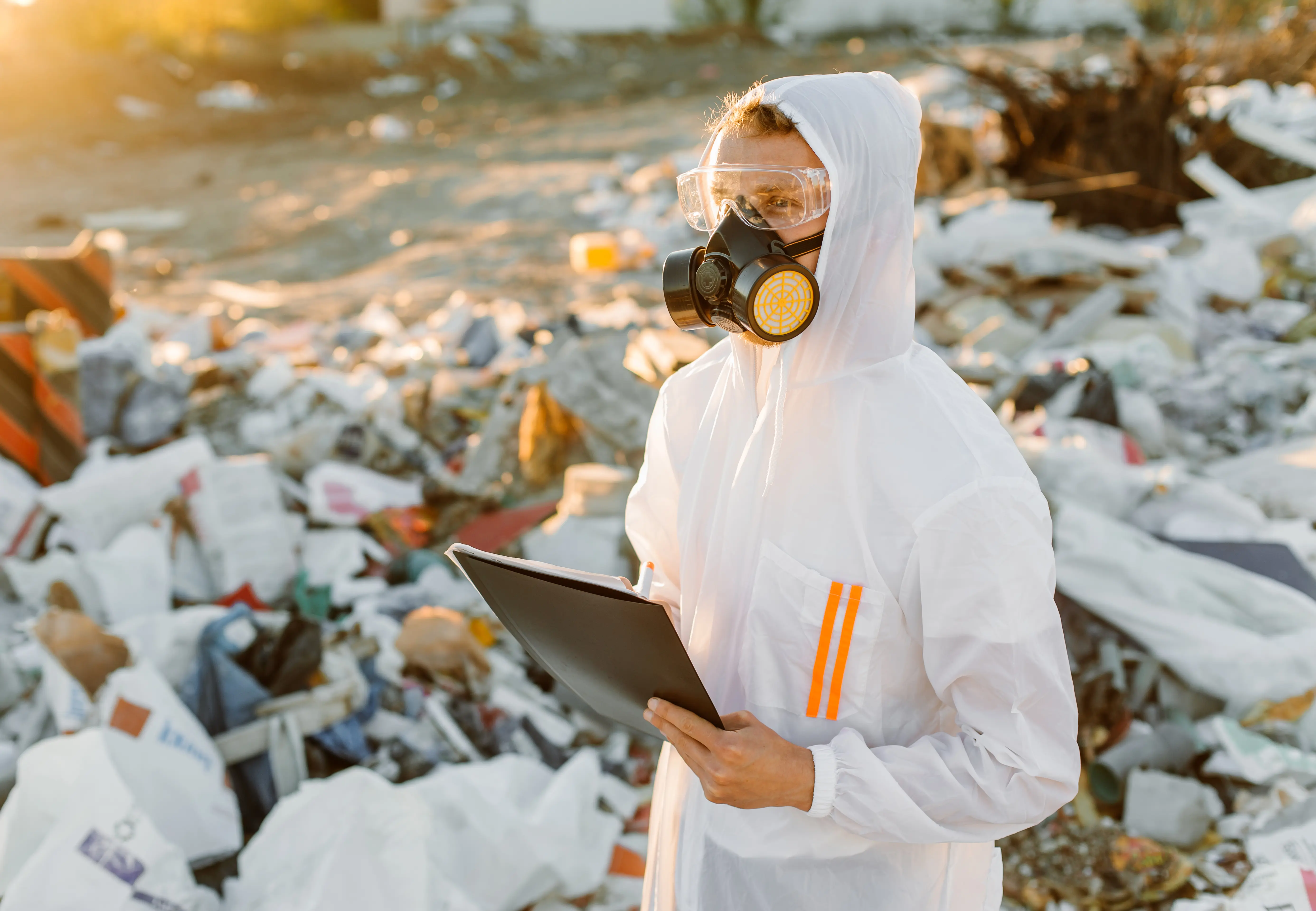
Hazardous Waste
- ☣️ Generated from industrial, healthcare, chemical, and manufacturing activities containing toxic, corrosive, flammable, or reactive substances
- 🧪 Includes chemicals, solvents, pesticides, heavy metals, biomedical residues, and certain electronic waste
- 🔒 Requires strict segregation, secure storage, and specialized treatment like incineration and stabilization
- 📋 Continuous monitoring, proper labeling, and trained personnel prevent accidents and environmental damage
- ✅ Compliance with regulations ensures ecosystem protection and long-term sustainability
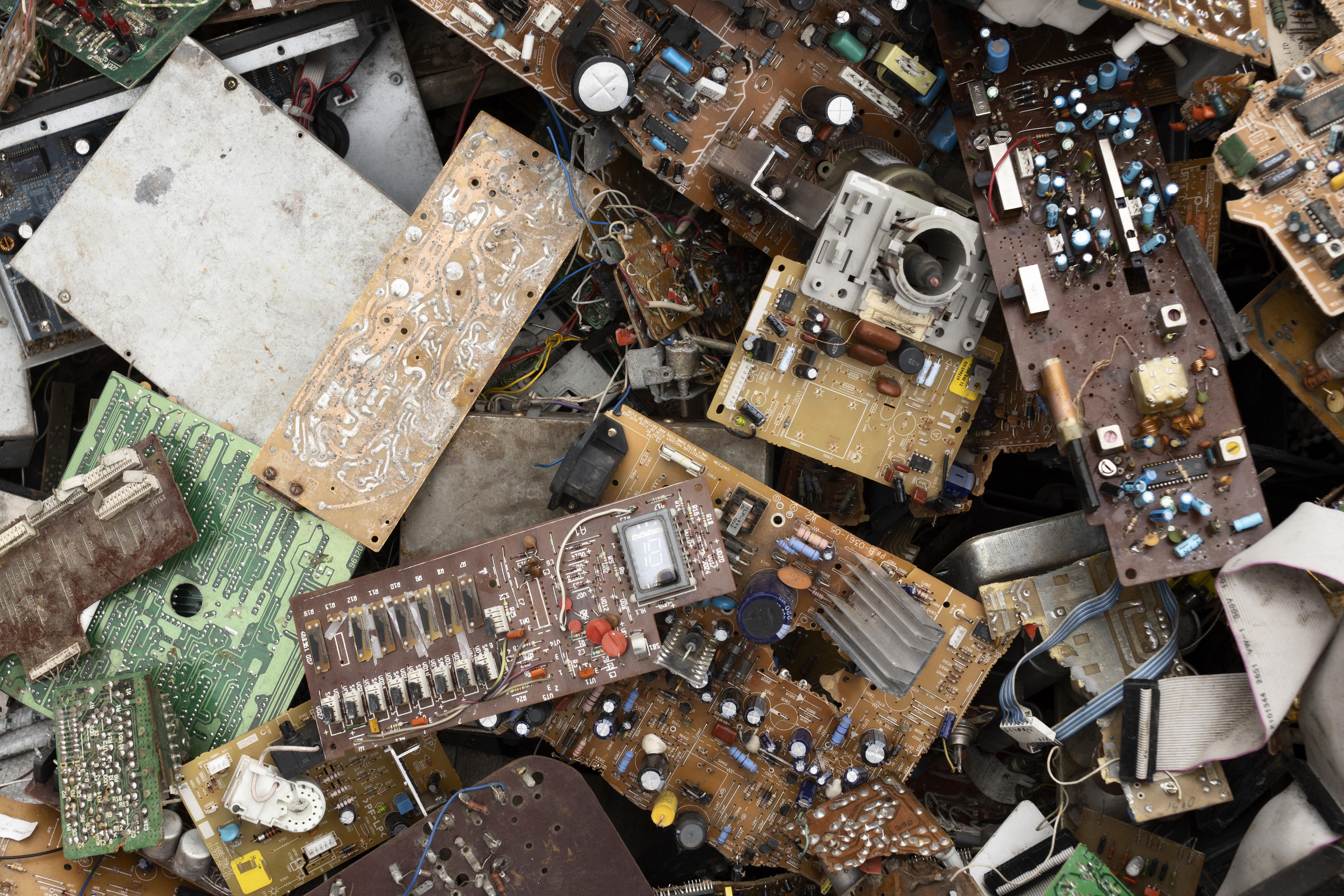
Electronic Waste (E-Waste)
- 💻 Generated from discarded electrical and electronic equipment like computers, phones, and appliances
- 🔋 Contains valuable materials like metals and plastics, along with hazardous substances such as lead and mercury
- ♻️ Managed through collection, dismantling, recycling, and safe disposal of non-recoverable components
- 🌍 Reduces demand for raw resources and supports sustainable technology use

Biomedical Waste
- 🧬 Generated from healthcare facilities including hospitals, clinics, and laboratories
- 💉 Includes infectious waste, sharps, human tissues, laboratory waste, and discarded medicines
- 🔒 Requires safe collection, treatment via autoclaving or incineration, and secure disposal
- ✅ Proper handling and training prevent infections and protect public health
Food Waste Treatment Plant (FWTP)
Sustainable Organic Waste Processing Solution
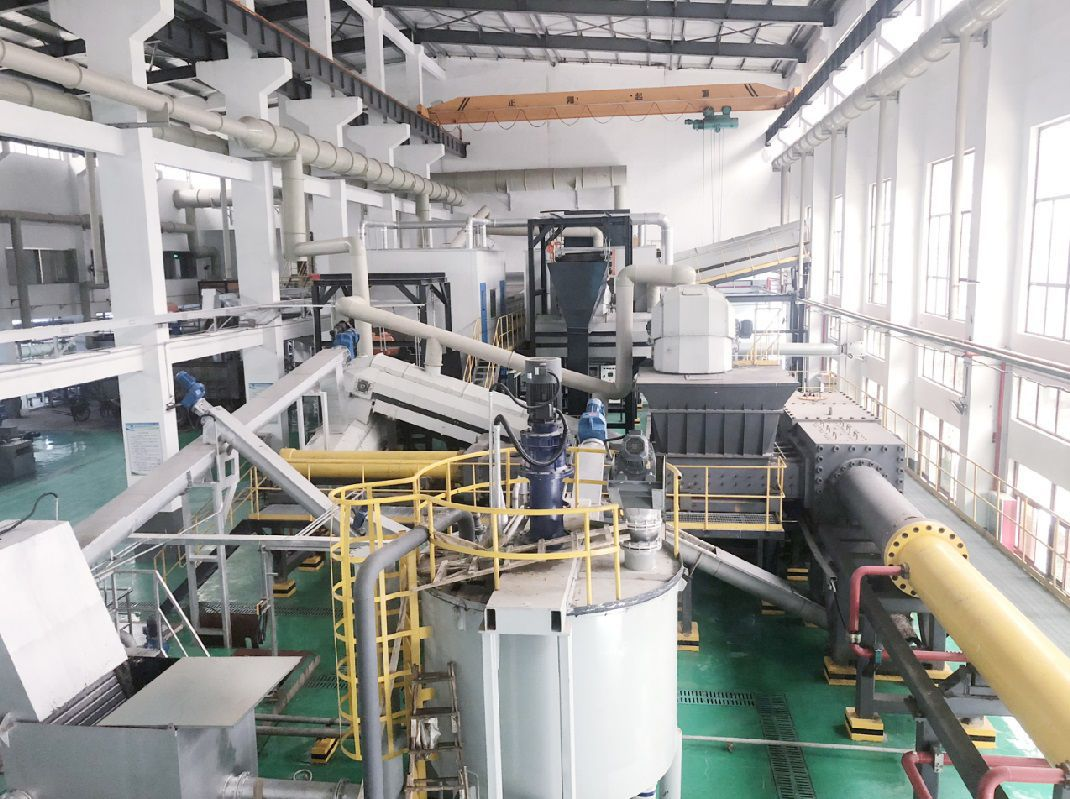
What is a FWTP?
- 🌱 Converts food waste into organic compost
- ♻️ Reduces landfill waste & methane emissions
- 💧 Treats moisture & leachate safely
- 🌬️ Enclosed odor-free processing
- 🌍 Supports eco-friendly waste management
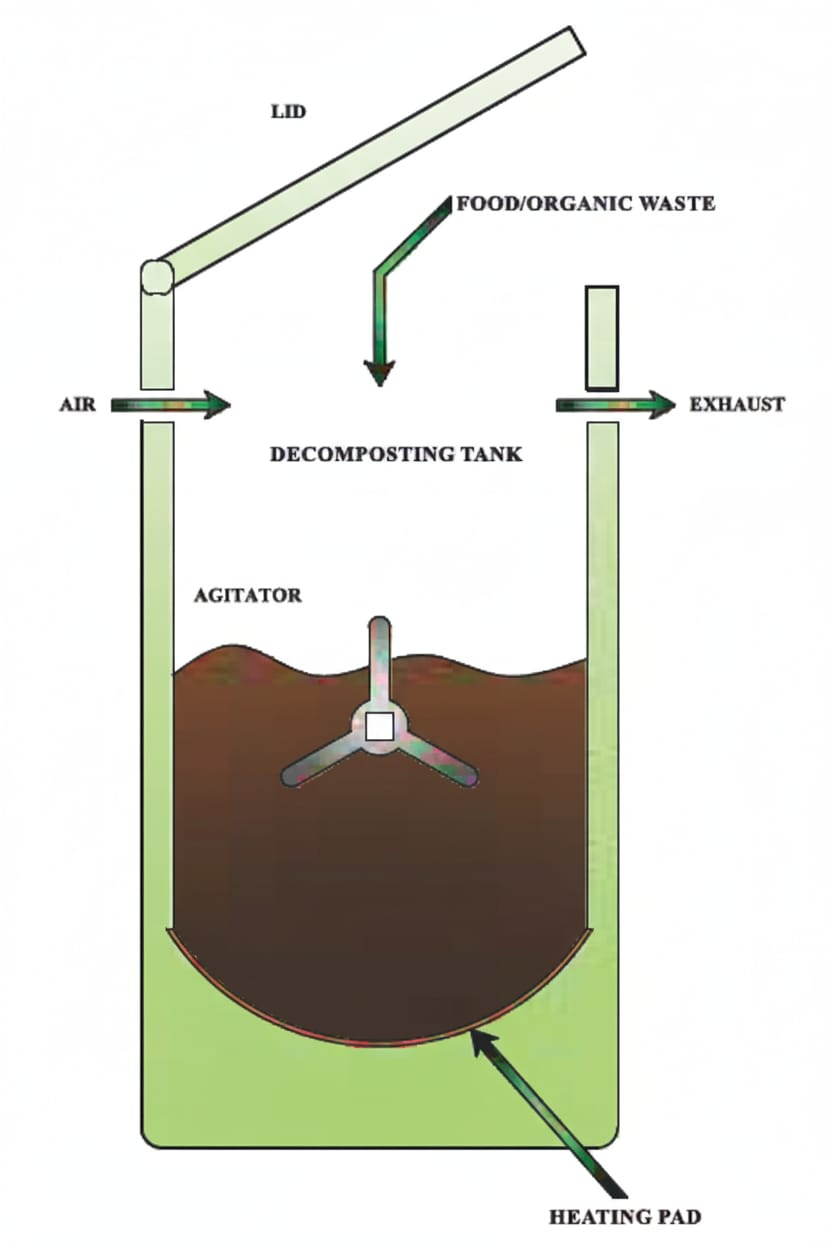
How FWTP Works
- 📥 Waste collection & inlet feeding
- ⚙️ Shredding & homogenization
- 🔥 Biological / thermal digestion
- 💧 Moisture separation & treatment
- 🌿 Compost / digestate output
FWTP Model Types
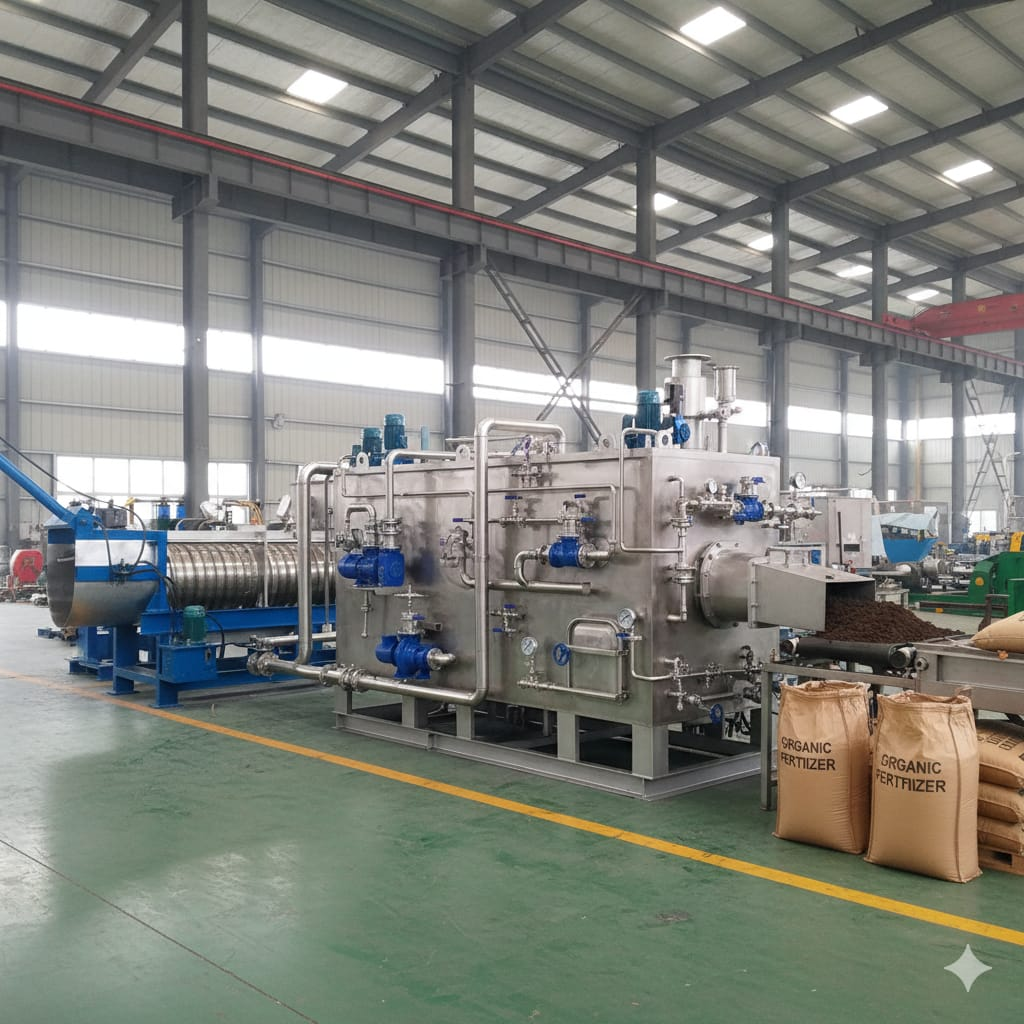
Model Alpha (FWTP-α / α+)
- 🏠 Homes & small restaurants
- ⚡ Low energy consumption
- ⏱️ 24-hour compost cycle
- 🌬️ Odor control filtration
- 🧩 Compact footprint
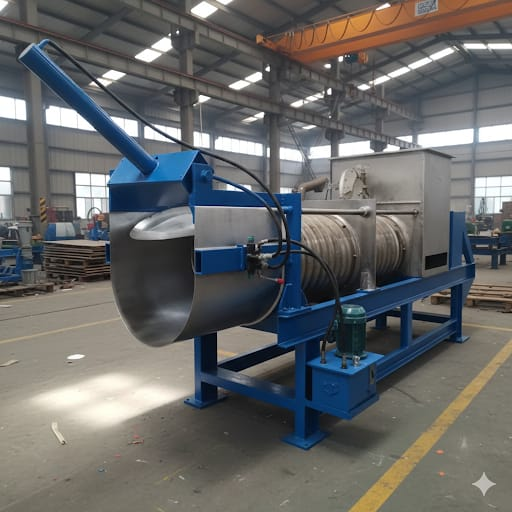
Model Beta (FWTP-β / β+)
- 🏨 Hotels & hostels
- 🔄 Auto mixing & heating
- 💧 Moisture separation system
- 📦 Medium waste capacity
- ✅ Stable compost output
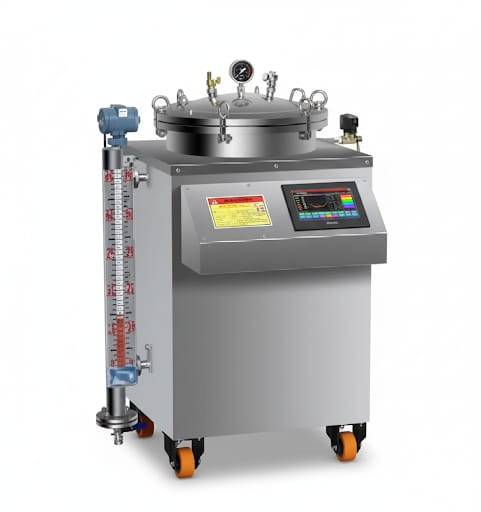
Model Gamma (FWTP-γ / γ+)
- 🏭 Industrial-scale processing
- 🧠 PLC-based automation
- 🔥 Biogas & compost generation
- 🔁 Continuous operation
- 📊 Real-time monitoring
Waste Segregation
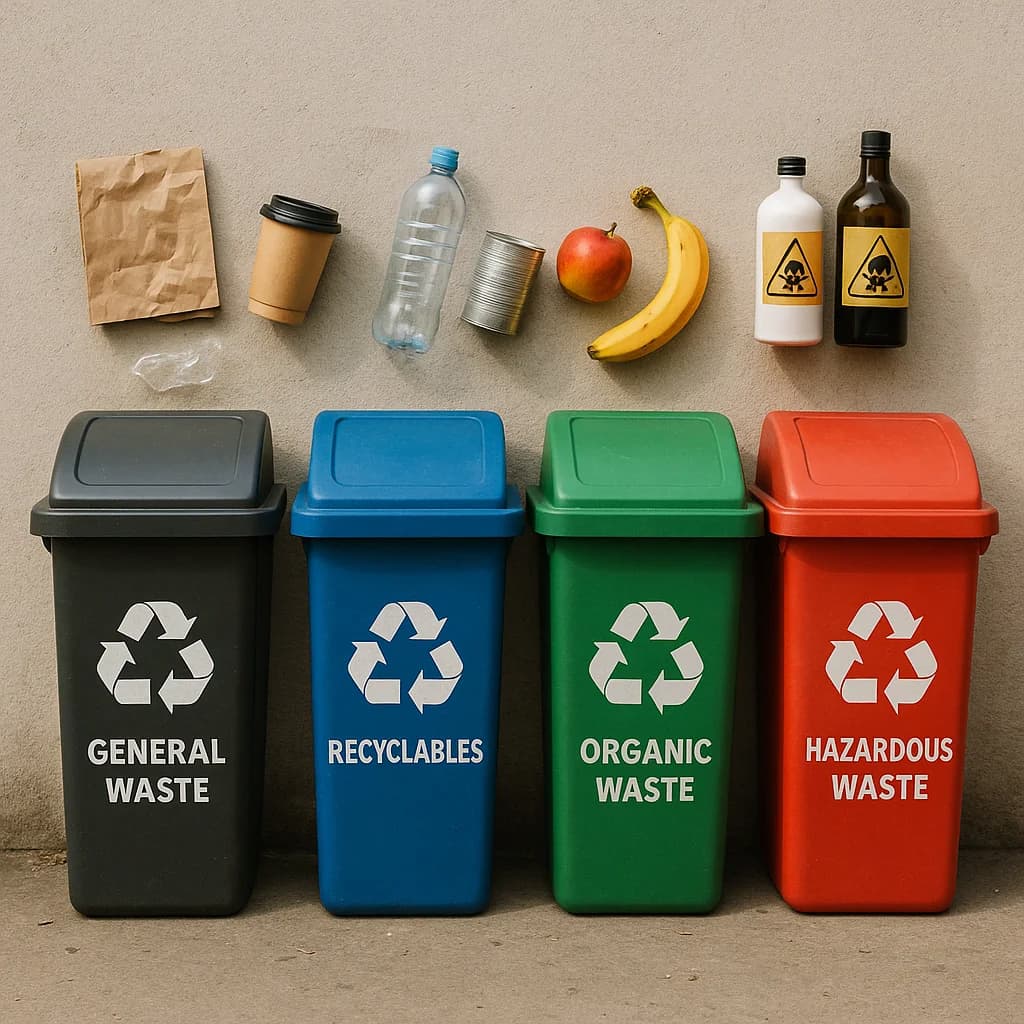
Waste segregation is the foundation of an efficient solid waste management system, enabling appropriate treatment and maximum resource recovery.
Industry Practices
- ✔ Source-level segregation
- ✔ Color-coded bins
- ✔ Compliance monitoring
Key Benefits
- 🔁 Improved recycling efficiency
- 📉 Reduced landfill usage
- 🛡️ Safe hazardous waste handling
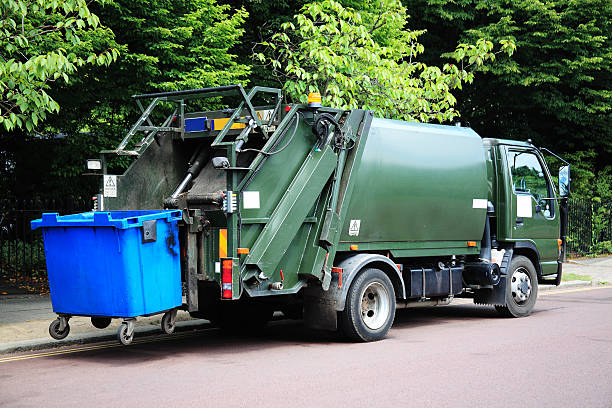
Collection & Transportation
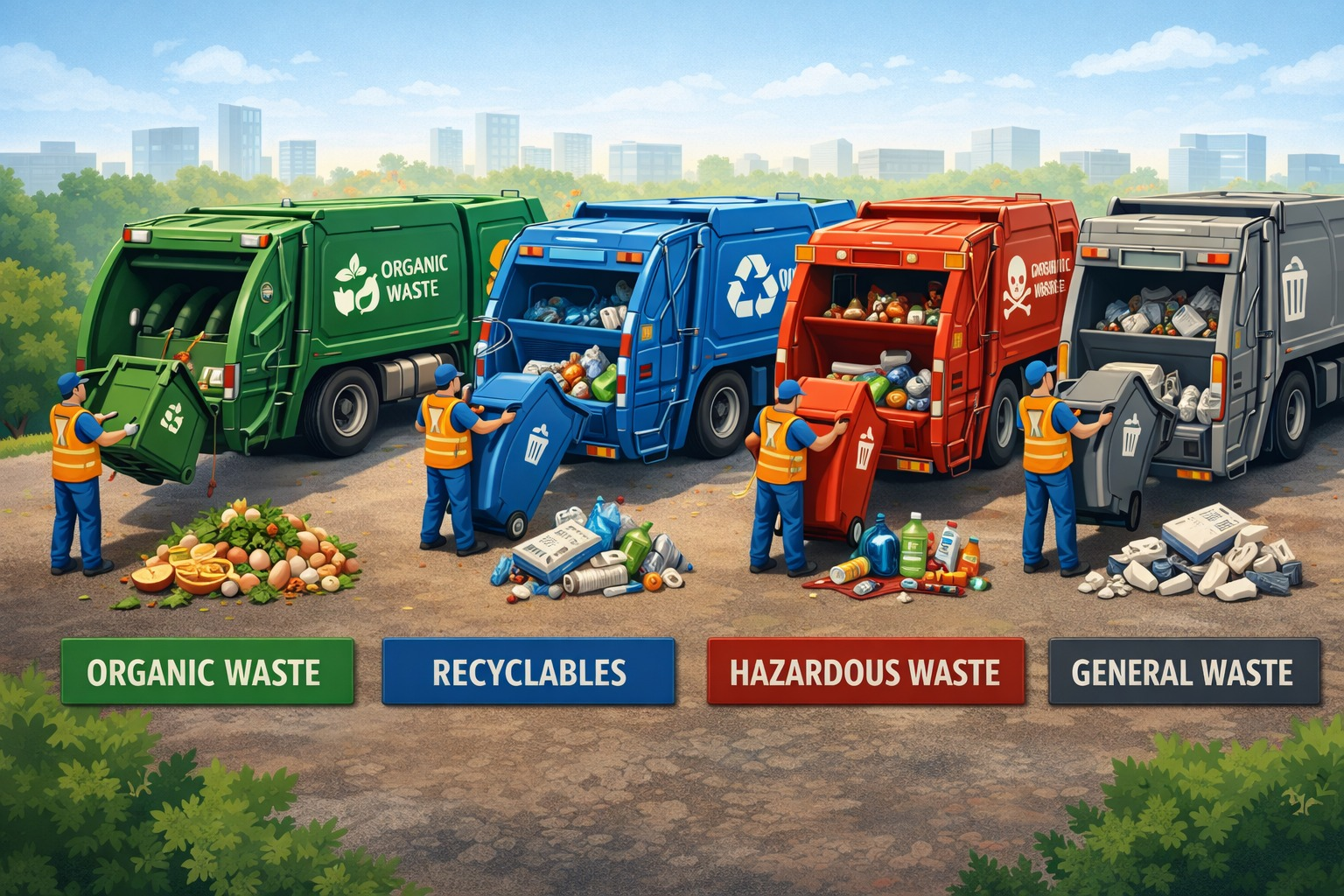
Modern collection and transportation systems ensure safe, hygienic, and efficient movement of waste from source to treatment facilities.
Industry Practices
- Door-to-door and bulk waste collection
- GPS-enabled route-optimized vehicles
- Closed-body and compactor trucks
Key Benefits
- Reduced pollution and odor
- Operational efficiency
- Real-time tracking and monitoring
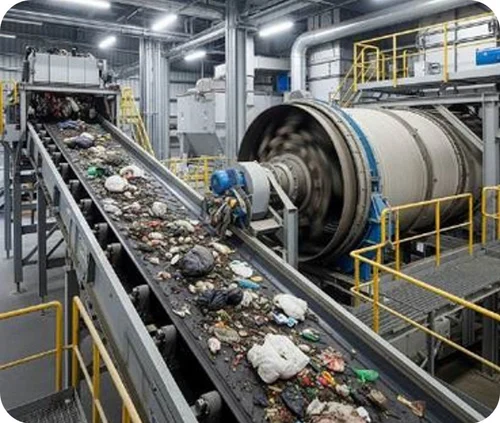
Processing Technologies
Advanced processing technologies convert waste into reusable materials, energy, or environmentally safe residues, supporting a circular economy.
Industry Practices
- Composting and biological treatment
- Material recovery and recycling
- Waste-to-Energy (WtE) systems
Key Benefits
- Reduced landfill dependency
- Resource and energy recovery
- Sustainable waste management
Modern waste management technologies are designed to address increasing waste generation, environmental concerns, and resource scarcity. These technologies focus on waste reduction, material recovery, energy generation, and safe disposal, forming an integrated system that supports sustainable urban and industrial development.
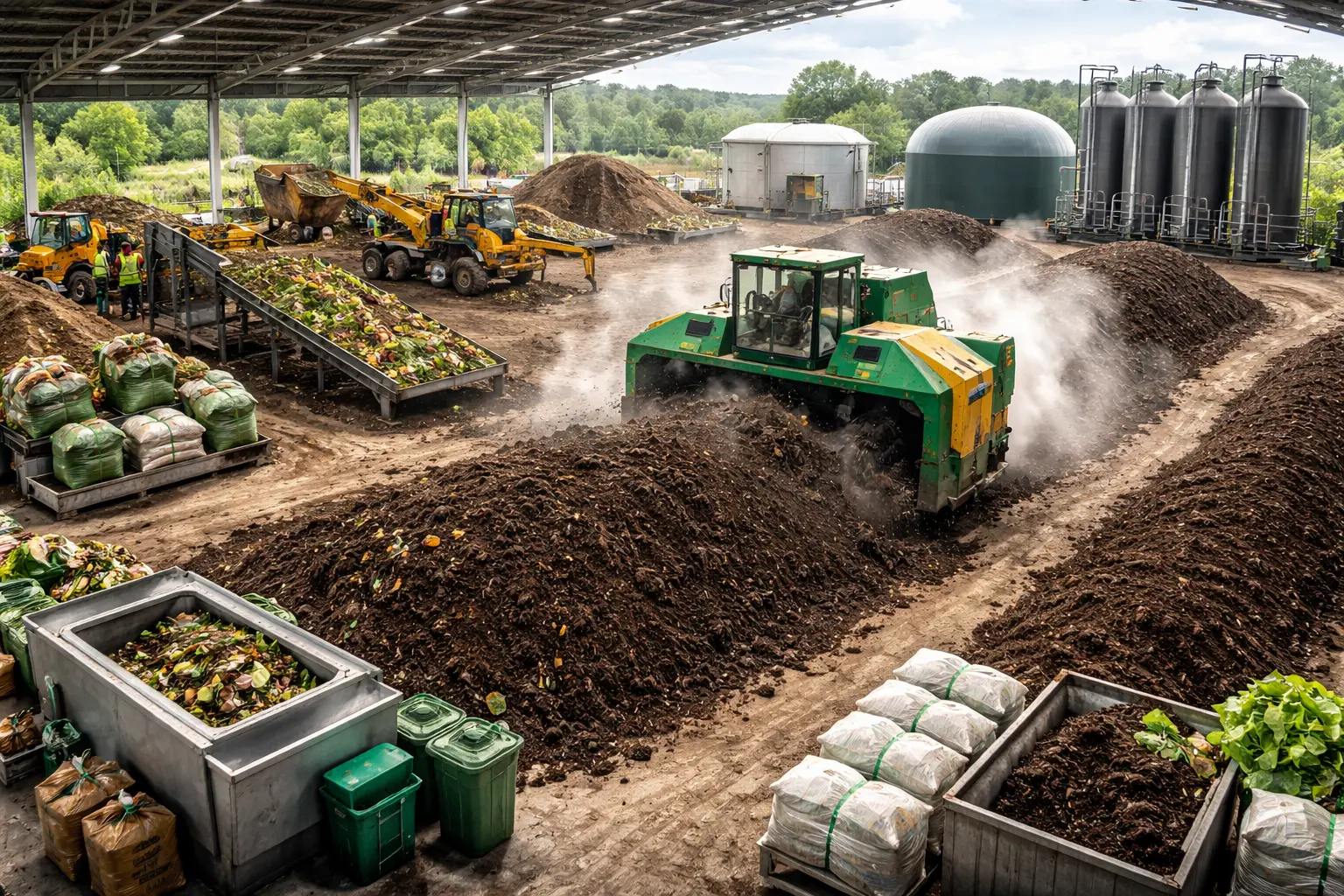
Biogas / Anaerobic Digestion Technology
Anaerobic digestion (AD) is a biological process conducted in the absence of oxygen, converting organic waste into biogas and digestate.
How It Works
Organic waste is pre-treated and fed into sealed digesters where microorganisms break it down, producing biogas (methane + CO₂) and nutrient-rich digestate.
Applications
- Electricity and heat generation
- Compressed biogas (CBG) for vehicles
- Digestate used as organic fertilizer
Benefits
- Renewable energy production
- Reduction of greenhouse gas emissions
- Energy-positive waste treatment
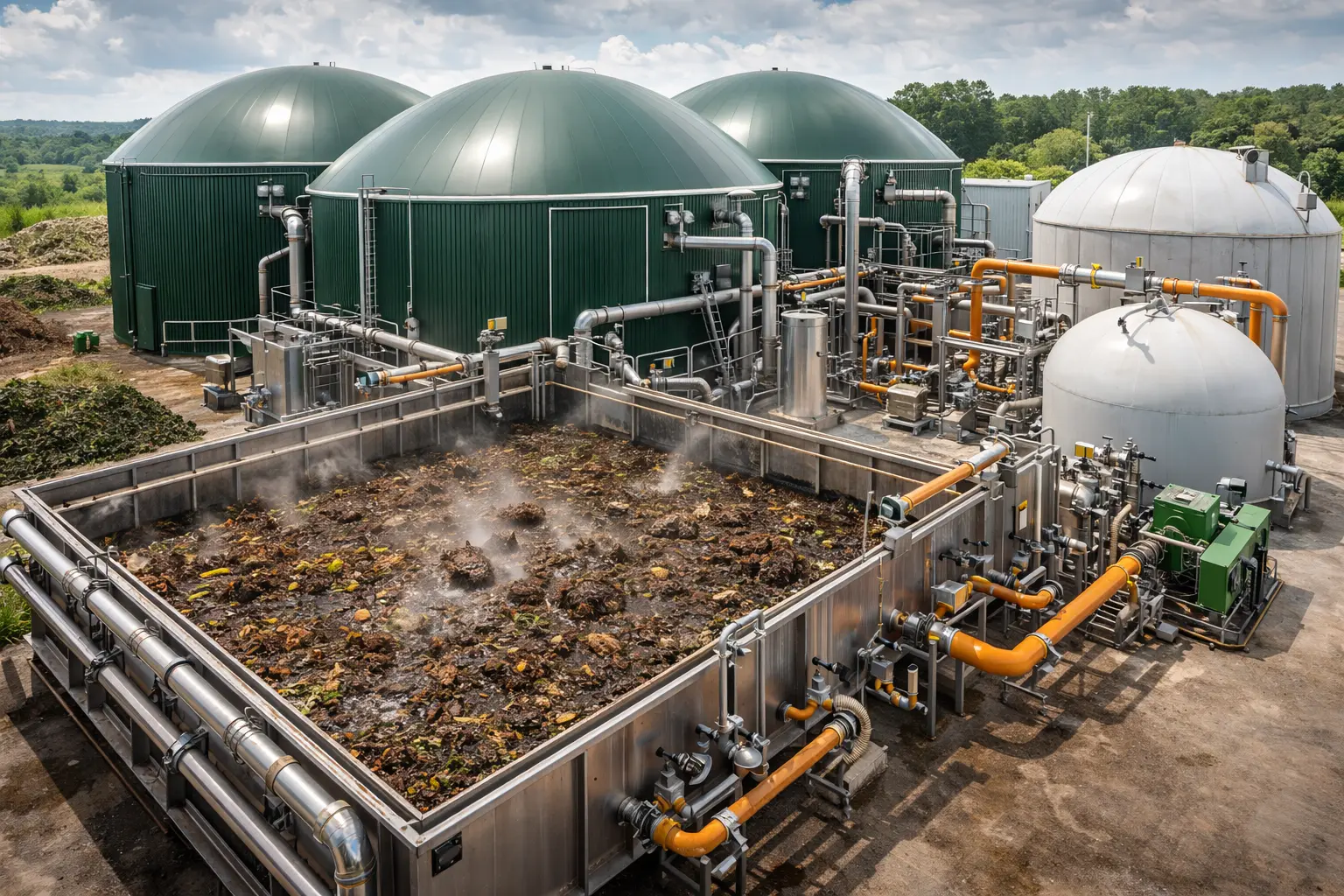
Recycling
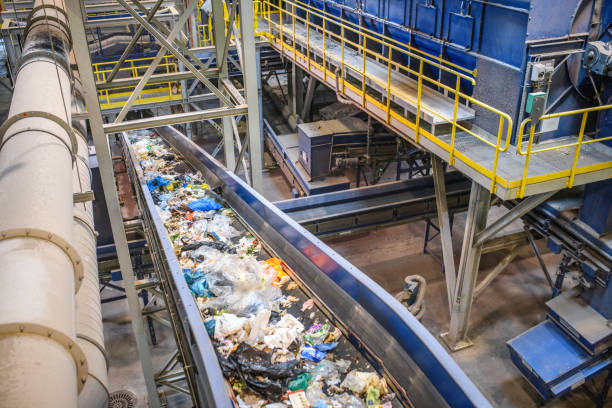
Recycling converts waste materials into new products, reducing raw material extraction, energy usage, and environmental pollution.
Key Features
- Reduces landfill burden
- Creates new products
- Saves energy
Applications
Plastic, paper, metals, and glass waste
Waste-to-Energy (WtE) Technologies
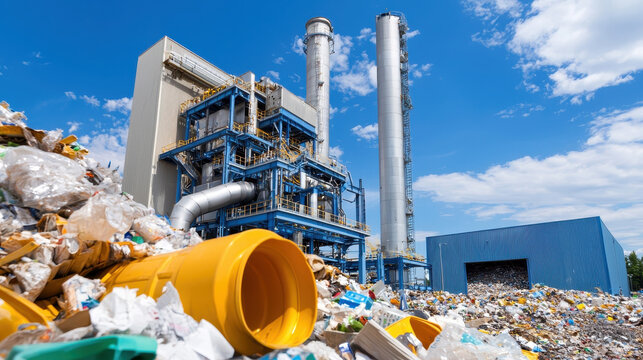
Waste-to-Energy technologies convert non-recyclable, high-calorific waste into usable energy through controlled thermal processes. These systems reduce environmental impact, lower landfill dependency, and generate electricity or heat from residual waste.
Common WtE Methods
- Mass burn incineration with energy recovery
- Refuse-Derived Fuel (RDF) systems
- Co-processing in cement kilns
Benefits
- Significant reduction in waste volume
- Continuous energy generation
- Reduced reliance on landfills
Material Recovery Facility (MRF)
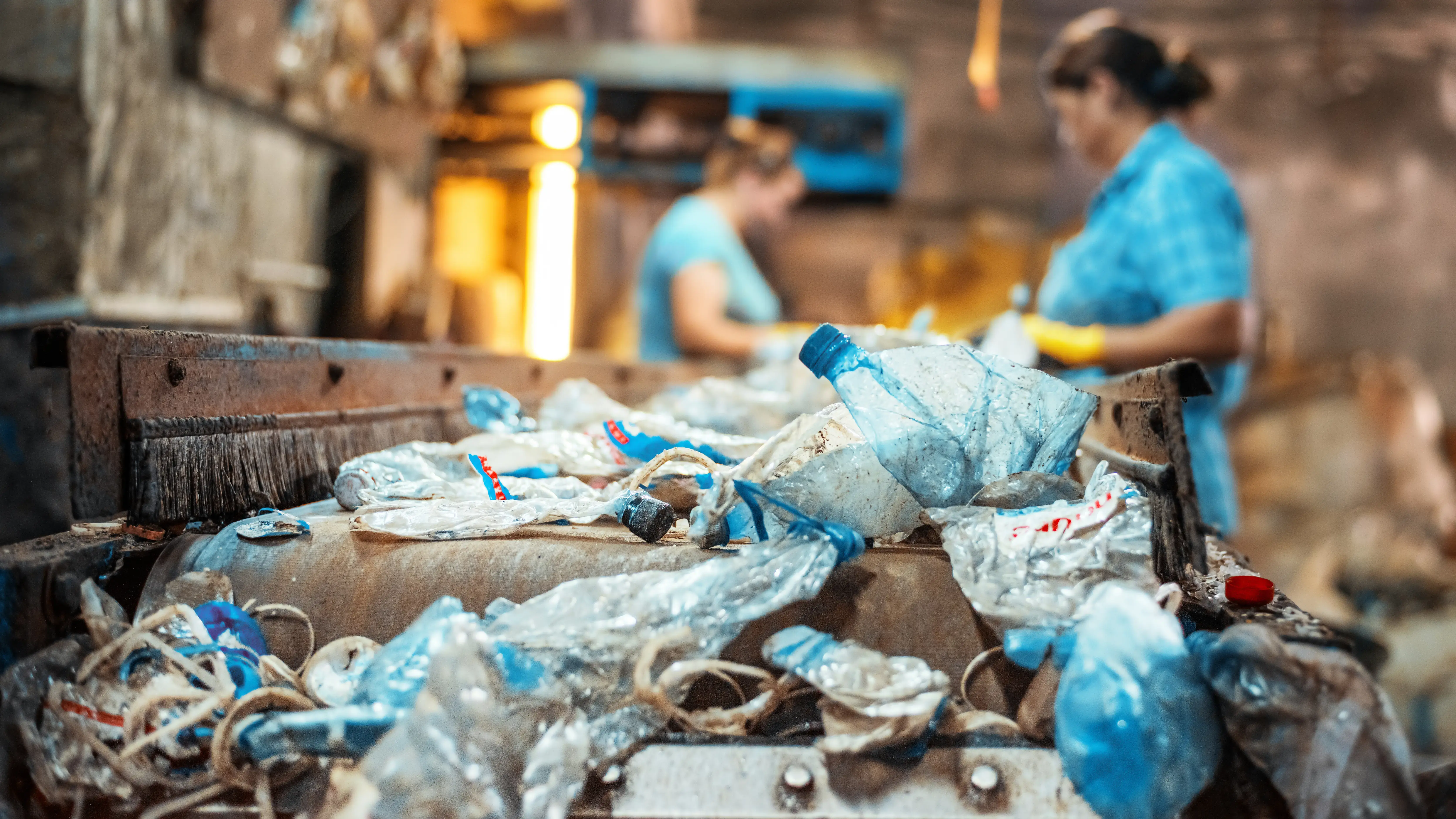
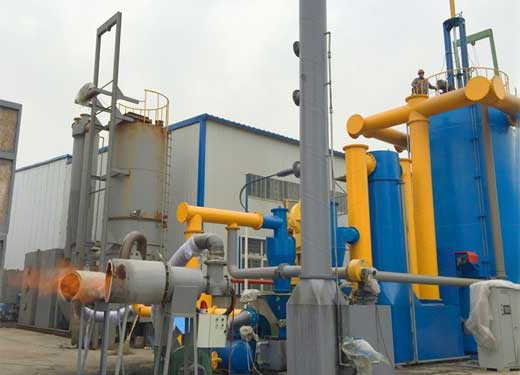
Material Recovery Facilities (MRFs) are mechanized plants designed to sort, segregate, and recover recyclable materials from mixed or segregated waste. They form a critical part of modern waste management systems, ensuring efficient recycling and resource recovery.
Key Technology Features
- Conveyor-based sorting lines for efficient segregation
- Magnetic, optical, and eddy current separators for material recovery
- Automated baling and storage systems for collected recyclables
Industry Value
- Maximizes recyclable recovery
- Improves quality of recovered materials
- Enhances overall system efficiency